
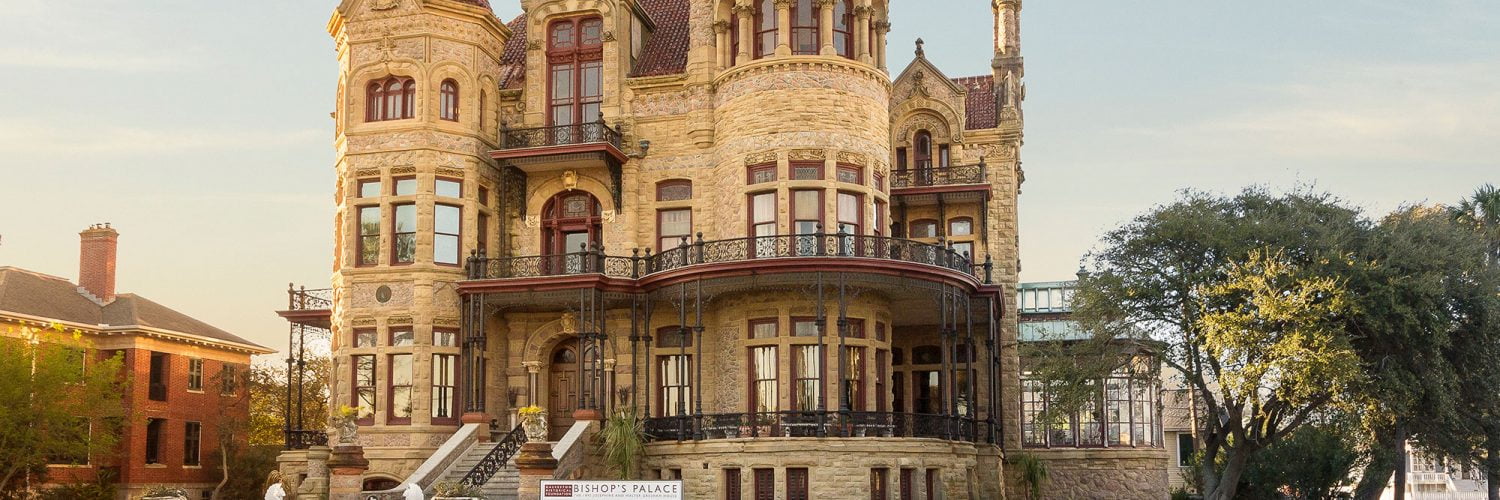
While healthy trees are an important part of the home’s historic setting, there are times when removal becomes the most responsible course of action,” explains Denise Alexander, GHF’s Interim Chief Operating Officer.
Aging or compromised trees can pose significant risks to historic structures, particularly during storms, where high winds and heavy rainfall can quickly turn weakened limbs or root systems into serious hazards. Proactively addressing these risks helps safeguard the building’s irreplaceable architectural features while ensuring a safe environment for visitors, staff, and volunteers.”
VIEW THE GALLERY BY CLICKING BELOW
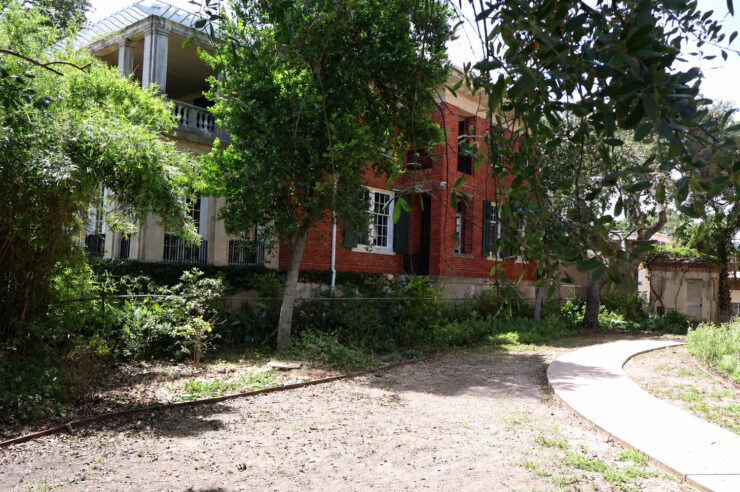
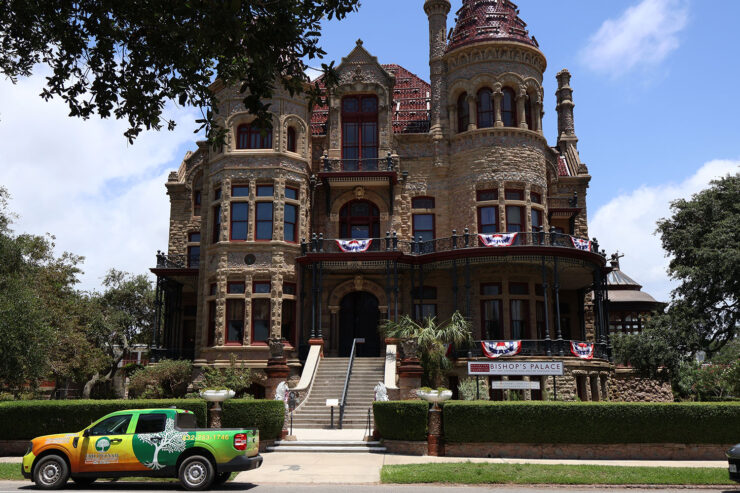
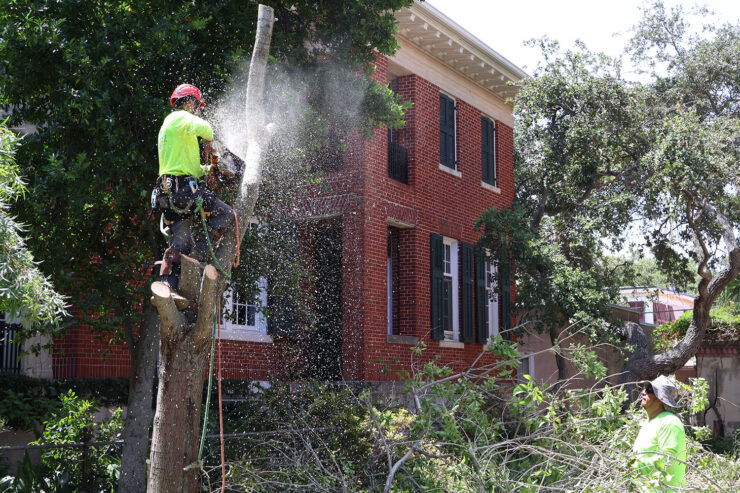

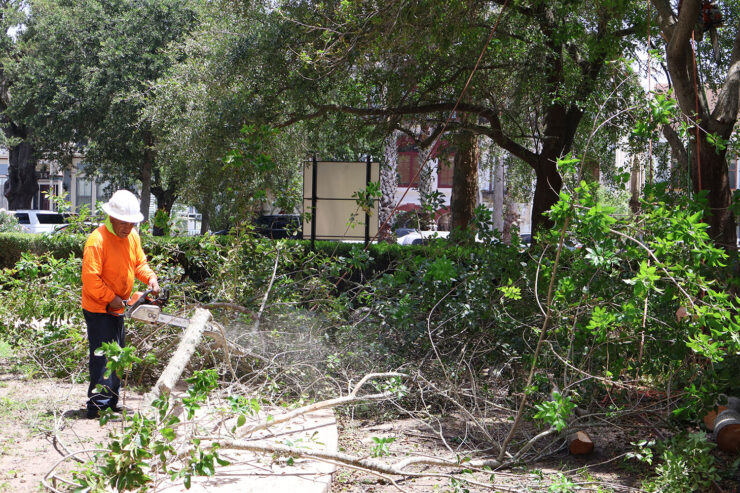
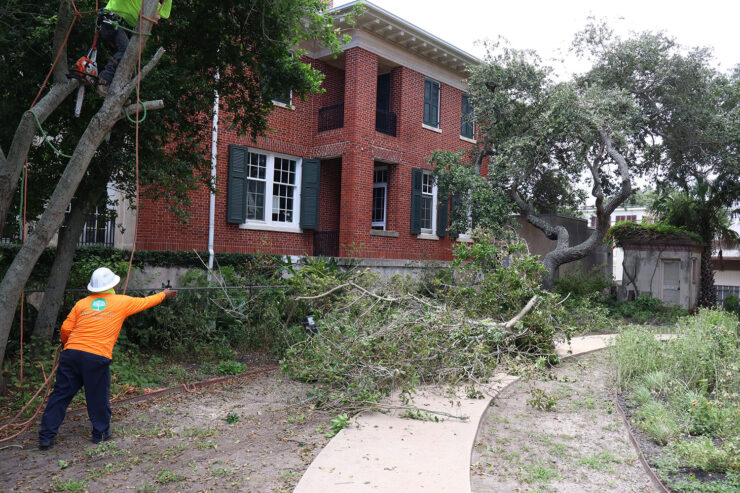
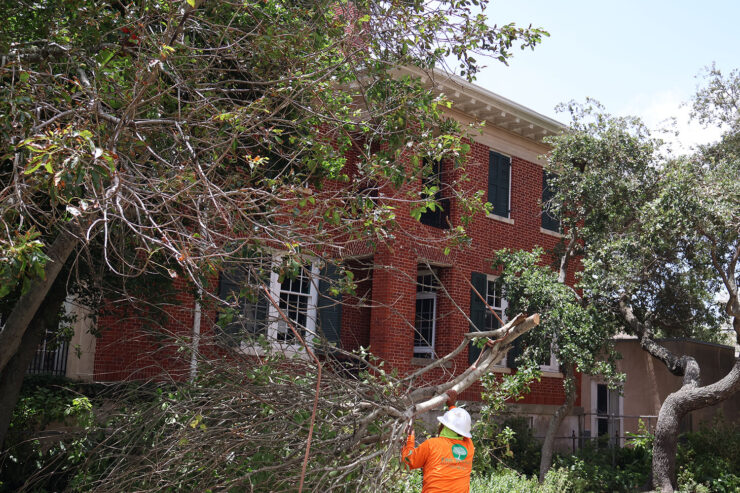
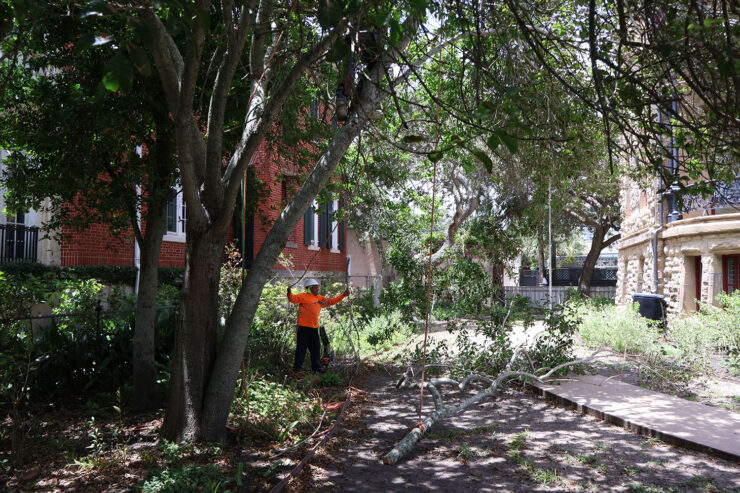
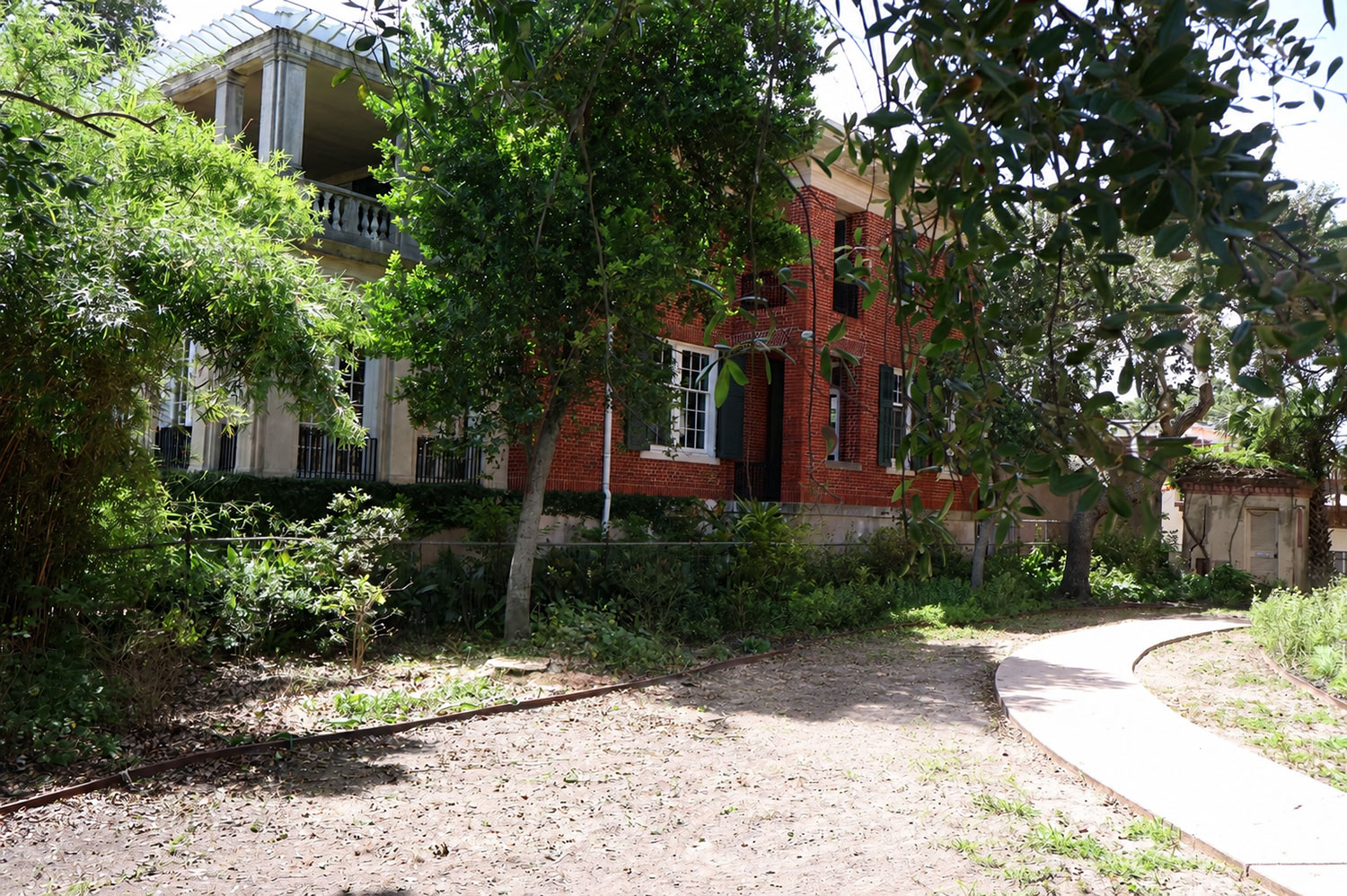
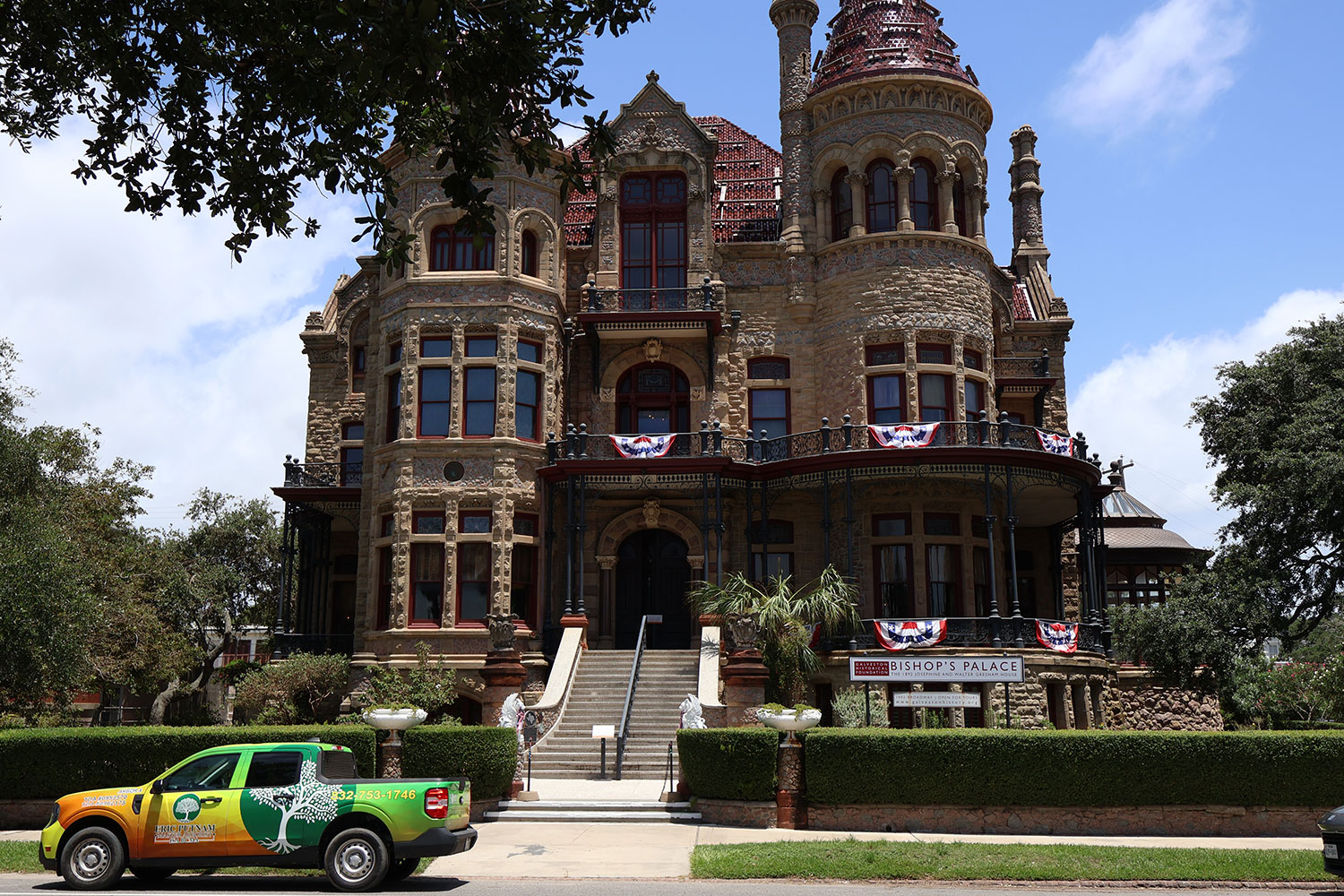
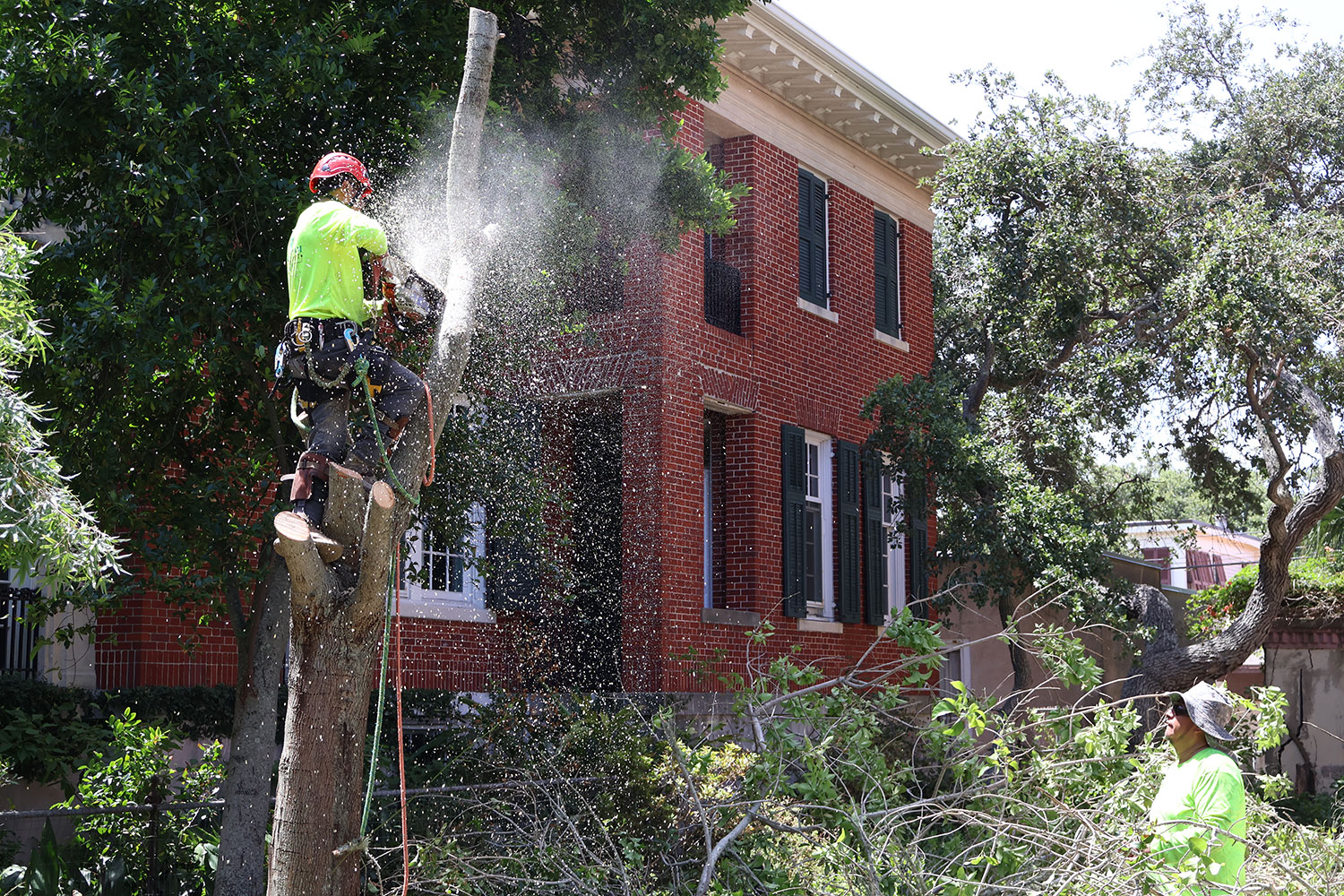

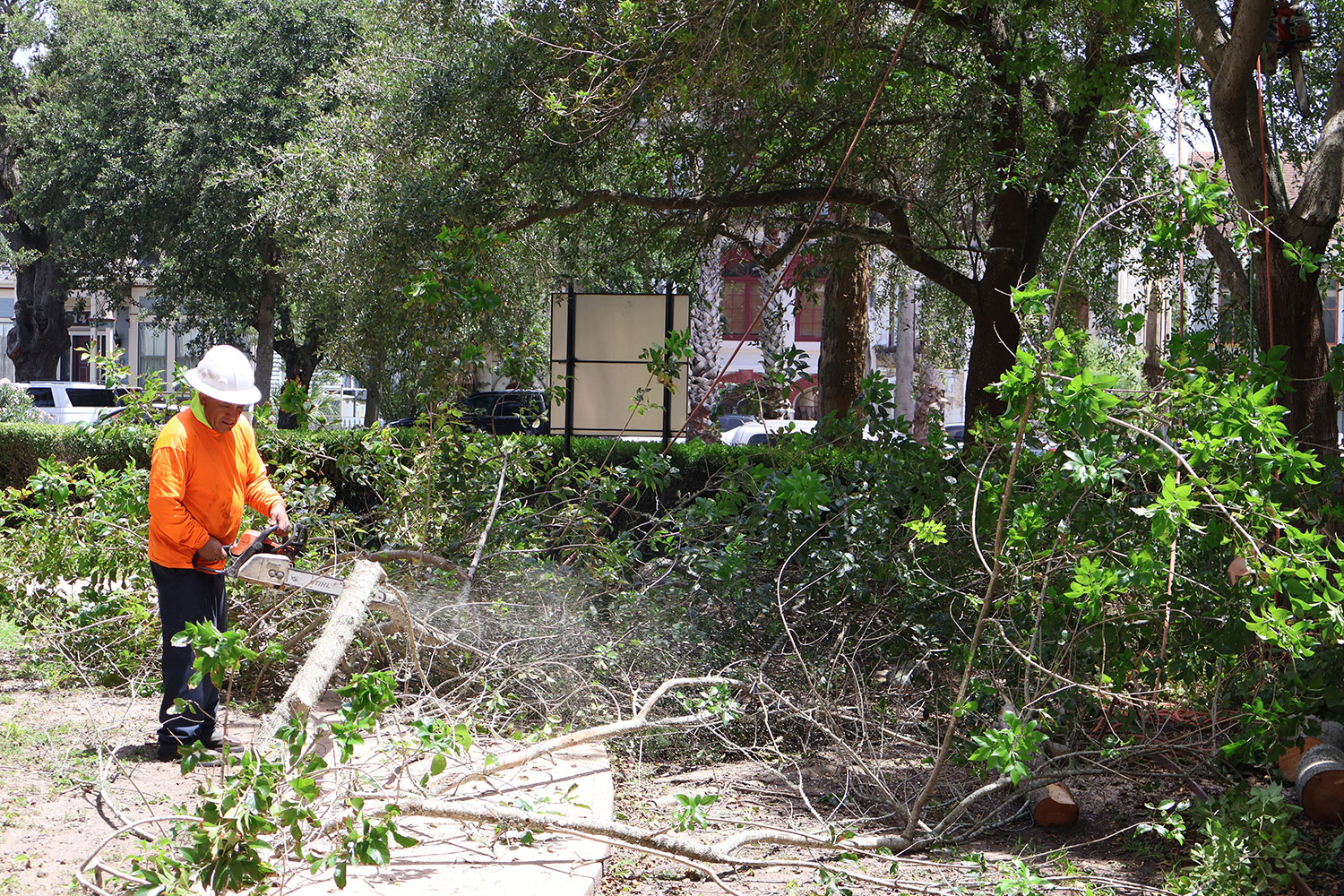
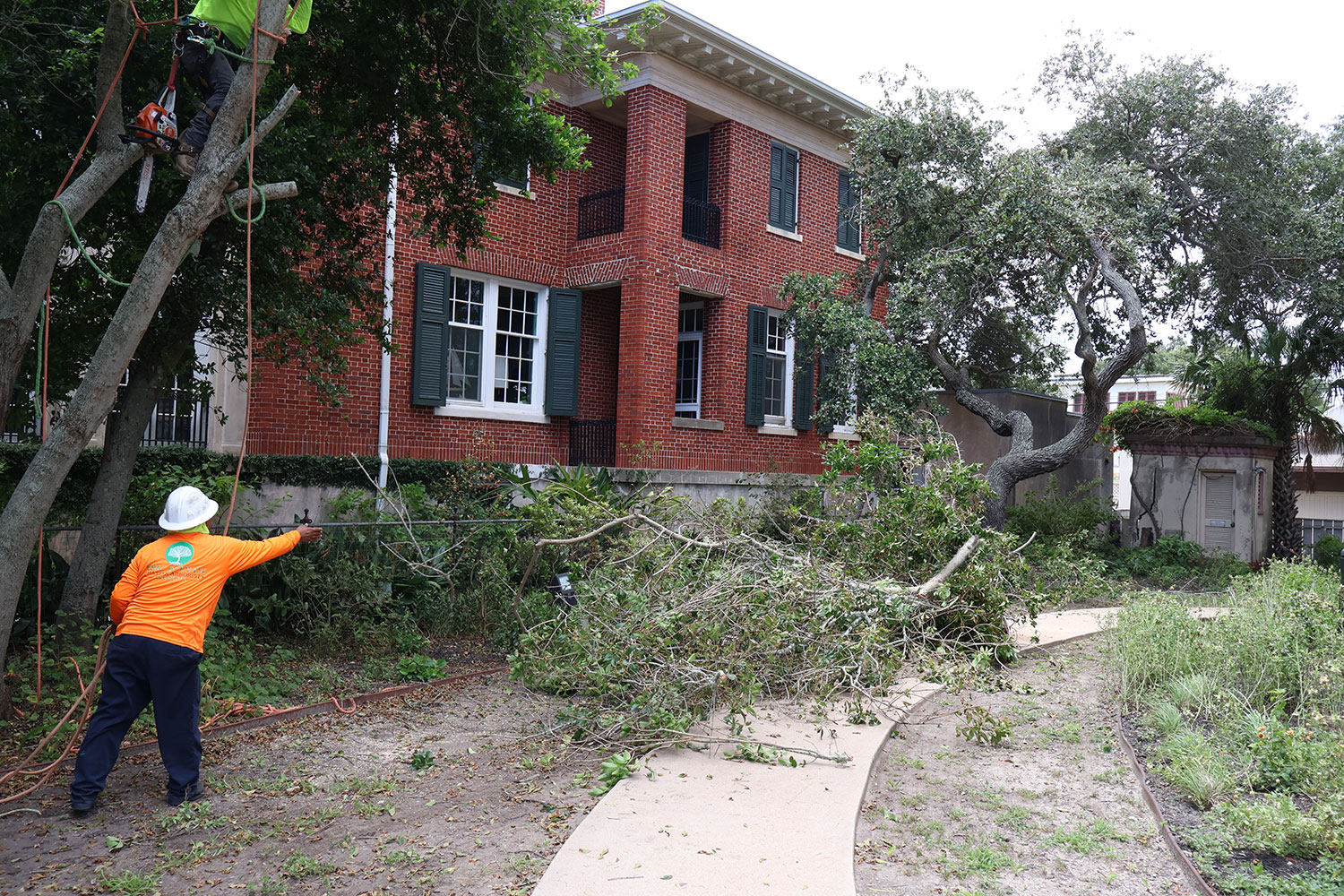
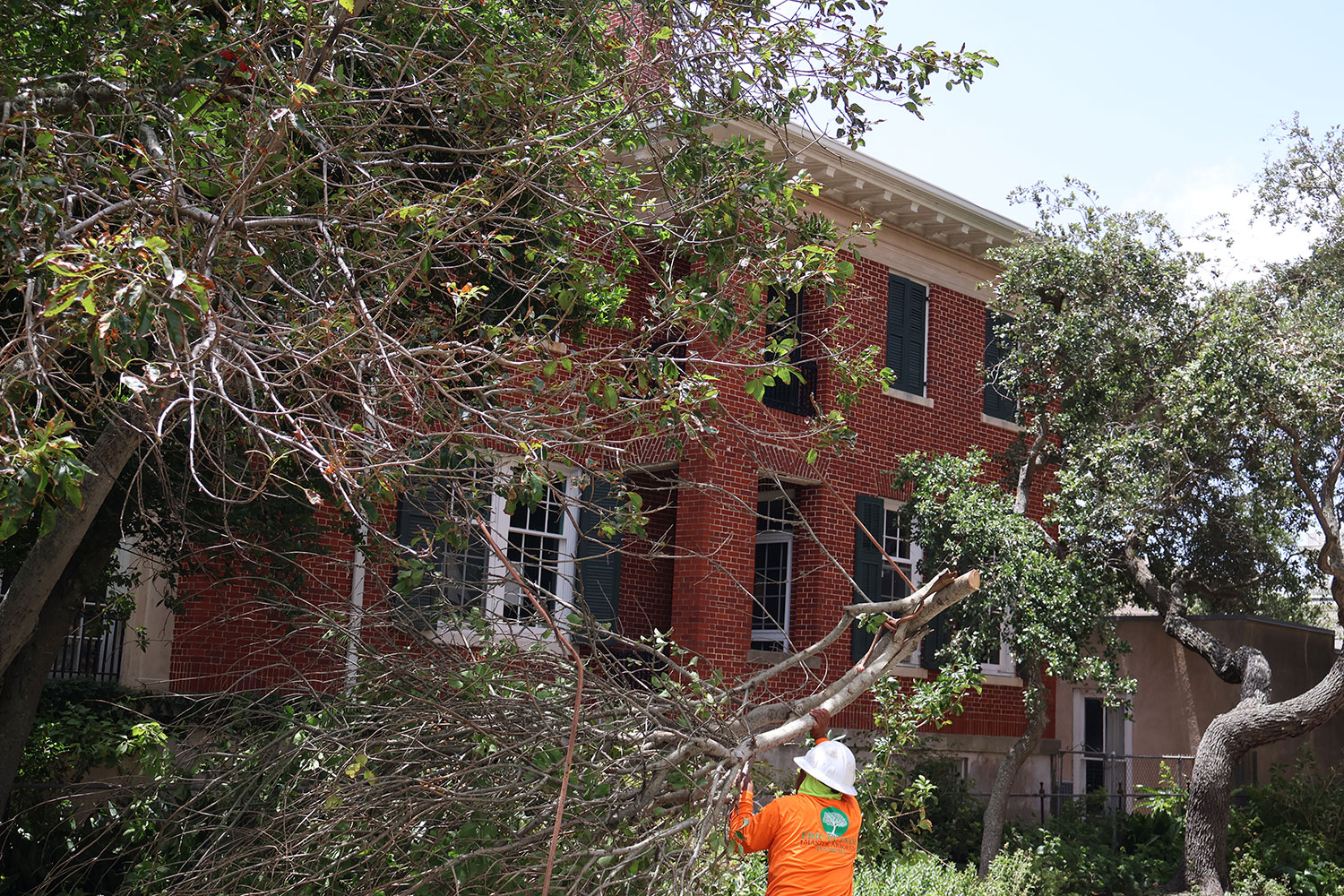
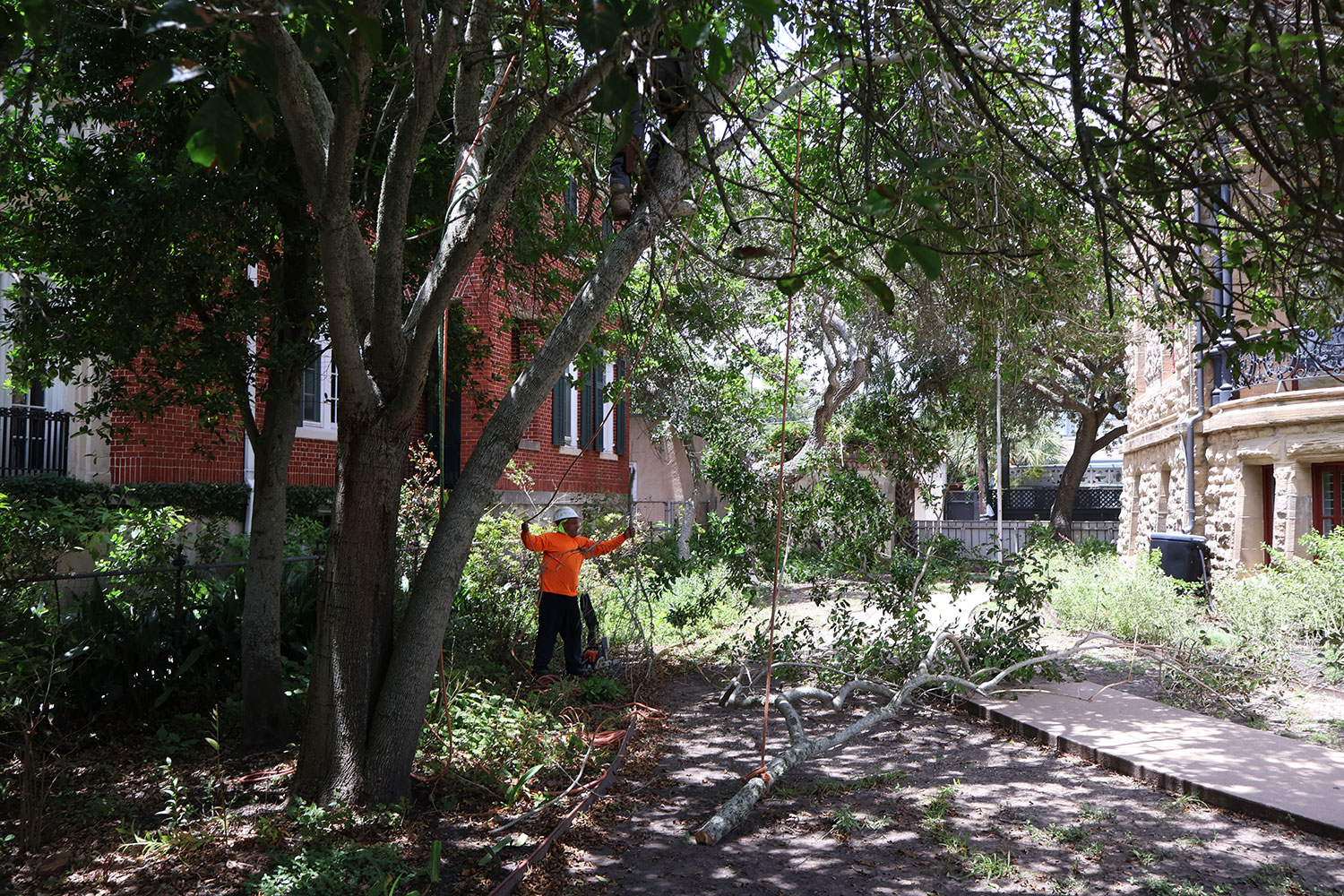
The work was completed by Eric Putnam BCMA Inc., who conducted the removal using professional arboricultural practices appropriate for a historic property. The project was carefully planned to protect the surrounding landscape and the home itself, with the tree removed in a controlled manner that minimized impacts to adjacent vegetation, historic features, and visitor areas.
“Preservation is often thought of as repairing what has been damaged, but it is equally about preventing damage before it occurs,” states Jason Blazek, Tree Surveyor for Eric Putnam BCMA Inc.”Routine maintenance, careful planning, and informed stewardship are essential to extending the life of historic places like the 1892 Bishop’s Palace for future generations.”
Galveston Historical Foundation remains committed to making thoughtful investments in the care of the National Historic Landmark, ensuring that this architectural masterpiece continues to inspire visitors while preserving its remarkable craftsmanship and history for decades to come.
ABOUT GALVESTON HISTORICAL FOUNDATION
Galveston Historical Foundation (GHF) was formed as the Galveston Historical Society in 1871 and merged with a new organization formed in 1954 as a non-profit entity devoted to historic preservation and history in Galveston County. Over the last seventy years, GHF has expanded its mission to encompass community redevelopment, historic preservation advocacy, maritime preservation, museum development, and heritage tourism. GHF embraces a broader vision of history and architecture that encompasses advancements in environmental and natural sciences and their intersection with historic buildings and coastal life, and continues to lead on local, state, and national levels with research-driven programs that build awareness of preservation’s role in cultural identity and stewardship across generations.